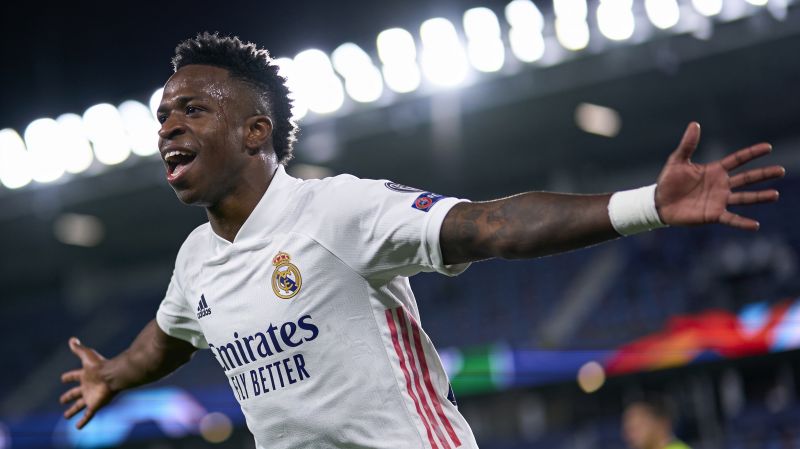
Five World Cup titles. More than any other nation. Yet the Brazilian national men's football team has not lifted the trophy since 2002, and the quarter-final exit in 2022 against Croatia — a match they controlled but lost on penalties — felt less like a shock and more like a recurring pattern. I remember watching that game in a packed bar in São Paulo, the silence at the final whistle heavier than any defeat I had seen. The problem wasn't talent;it was a kind of structural drift that no amount of individual brilliance could hide.The 2022 squad arrived in Qatar as favourites。at least according to the bookmakers. Vinícius Júnior was in scintillating form, Neymar had rediscovered his fitness, and the midfield looked balanced. But the warning signs were there in the group stage: a laboured 1-0 win over Switzerland, a 1-0 defeat to Cameroon with a rotated side. Tite's tactical rigidity — a fixed 4-2-3-1 that often left the full-backs exposed — became a liability against organised European sides. When Croatia equalised in the 117th minute, Brazil had no answer. The substitution of Fred for Lucas Paquetá in extra time was, in hindsight, a conservative move that invited pressure. That's not a knock on Tite's overall record, but it illustrates a broader issue: the Brazilian national men's football team has struggled to adapt in real time during knockout matches.
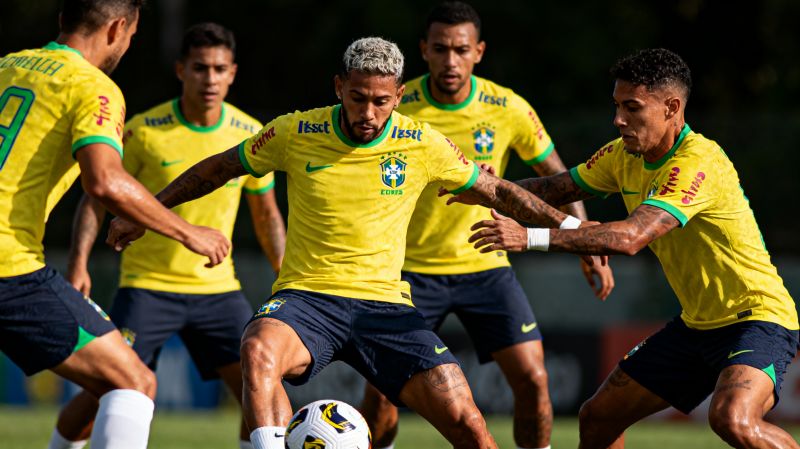
Compare that to the 1994 and 2002 teams. Carlos Alberto Parreira's 1994 side was pragmatic, almost European in its caution, and it worked. Luiz Felipe Scolari's 2002 team had the luxury of a fully fit Ronaldo, Rivaldo, and Ronaldinho — a front three that could dismantle any defence. But even then, the team relied on individual moments rather than a coherent pressing structure. The difference now is that the global game has caught up tactically. European nations, particularly France, Germany。and Croatia, have developed systems that neutralise Brazil's attacking flair. The Brazilian national men's football team still produces world-class forwards — Vinícius, Rodrygo, Gabriel Martinelli — but the supply line from midfield has been inconsistent. Casemiro's decline at the international level is a glaring concern, and no clear replacement has emerged.Dorival Júnior's appointment in January 2024 brought a shift in tone. He speaks about 'recovering the joy' of Brazilian football, a phrase that sounds romantic but carries real tactical weight. In his first few matches, he experimented with a 4-3-3 that pushed Bruno Guimarães higher up the pitch and gave Raphinha a free role on the right. The 3-3 draw against Spain in March 2024 was chaotic but revealing — Brazil twice led, then conceded late, and the defensive frailties were obvious. Still。there was a willingness to press higher and commit numbers forward that had been missing under Tite. I'm not convinced Dorival is the long-term answer, but he understands that the Brazilian national men's football team cannot simply outscore opponents anymore. The Copa América 2024 exit against Uruguay on penalties — another quarter-final loss — showed that the margins remain razor-thin.What strikes me most is the psychological burden. Every Brazilian player who wears the number 10 is compared to Pelé, Zico, Rivaldo。Ronaldinho. That's an impossible standard. Neymar carried it for a decade, often brilliantly, but the team's dependence on him became a weakness. The next generation — Endrick, Savinho, Estêvão — has talent but lacks the tournament experience to shoulder that weight alone. The Brazilian national men's football team needs a coherent identity that doesn't rely on a single superstar. That means a midfield that controls tempo, a defence that communicates, and a coach who can make bold calls in the 80th minute. Until then, the five stars on the crest will remain a reminder of past glory rather than a promise of future dominance.